
How an on-grid solar system
powers your home
How an on-grid solar system powers your home
The most common — and most affordable — way to go solar in Australia.
No batteries required to start saving: your panels feed your home first, and
anything spare goes back to the grid as credit.
The most common — and most affordable — way to go solar in Australia. No batteries required to start saving: your panels feed your home first, and anything spare goes back to the grid as credit.
The flow your energy makes
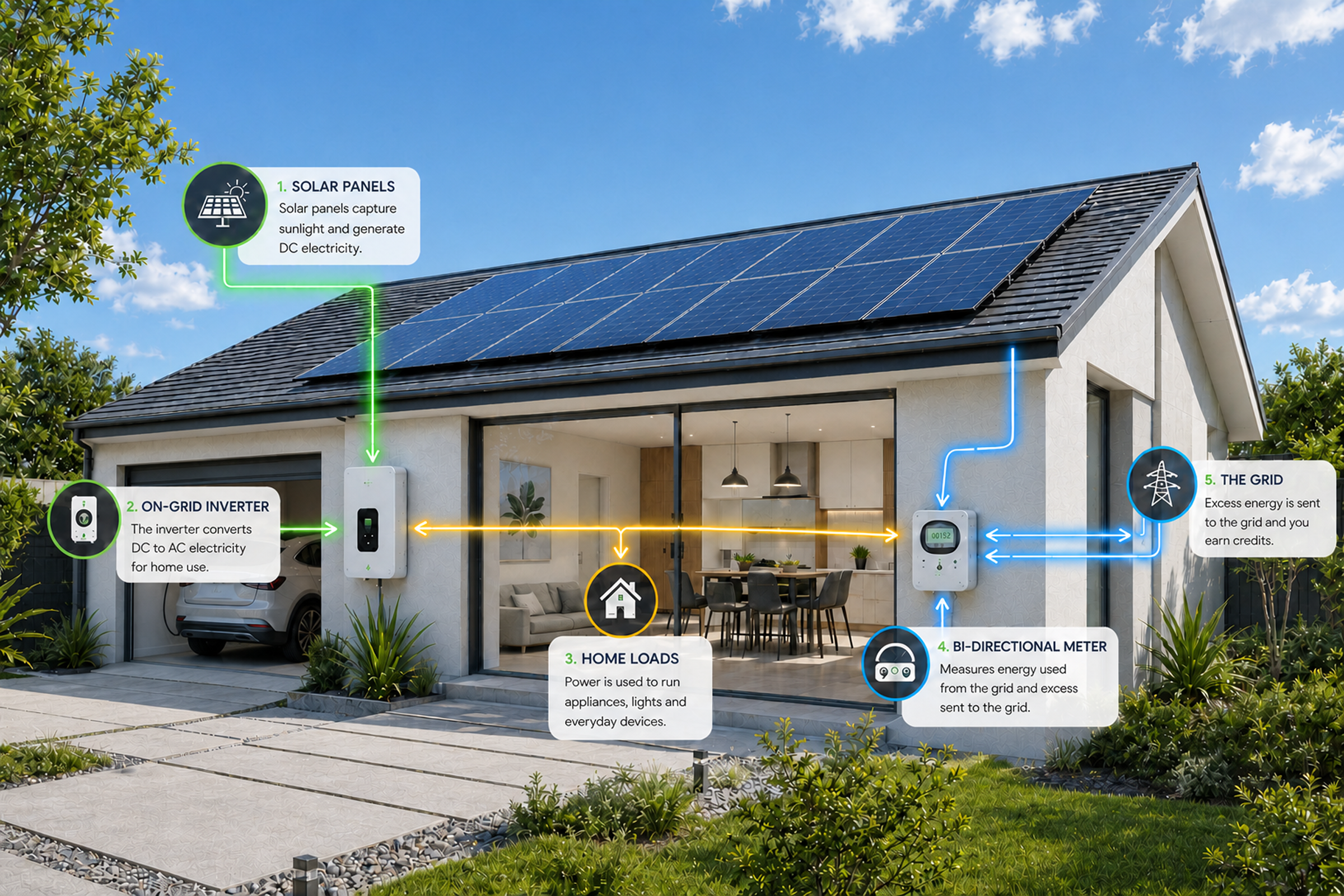
From sunlight on the roof to a credit on your bill, here’s the full path electricity takes through an on-grid system.
01
Solar Panels
Panels on your roof capture sunlight and generate DC (direct current) electricity throughout the day.
02
On-Grid Inverter
The inverter converts that DC electricity into AC (alternating current) — the form your home’s appliances actually run on.
03
Home Loads
AC power is used first, running your lights, appliances and everyday devices in real time as it’s generated.
04
Bi-Directional Meter
A smart meter measures two things: any extra power you draw from the grid, and any excess solar you send back to it.
05
The Grid
Excess energy your home doesn’t use is exported to the grid, earning you feed-in credit on your electricity bill.
Add a battery and keep more of what you generate
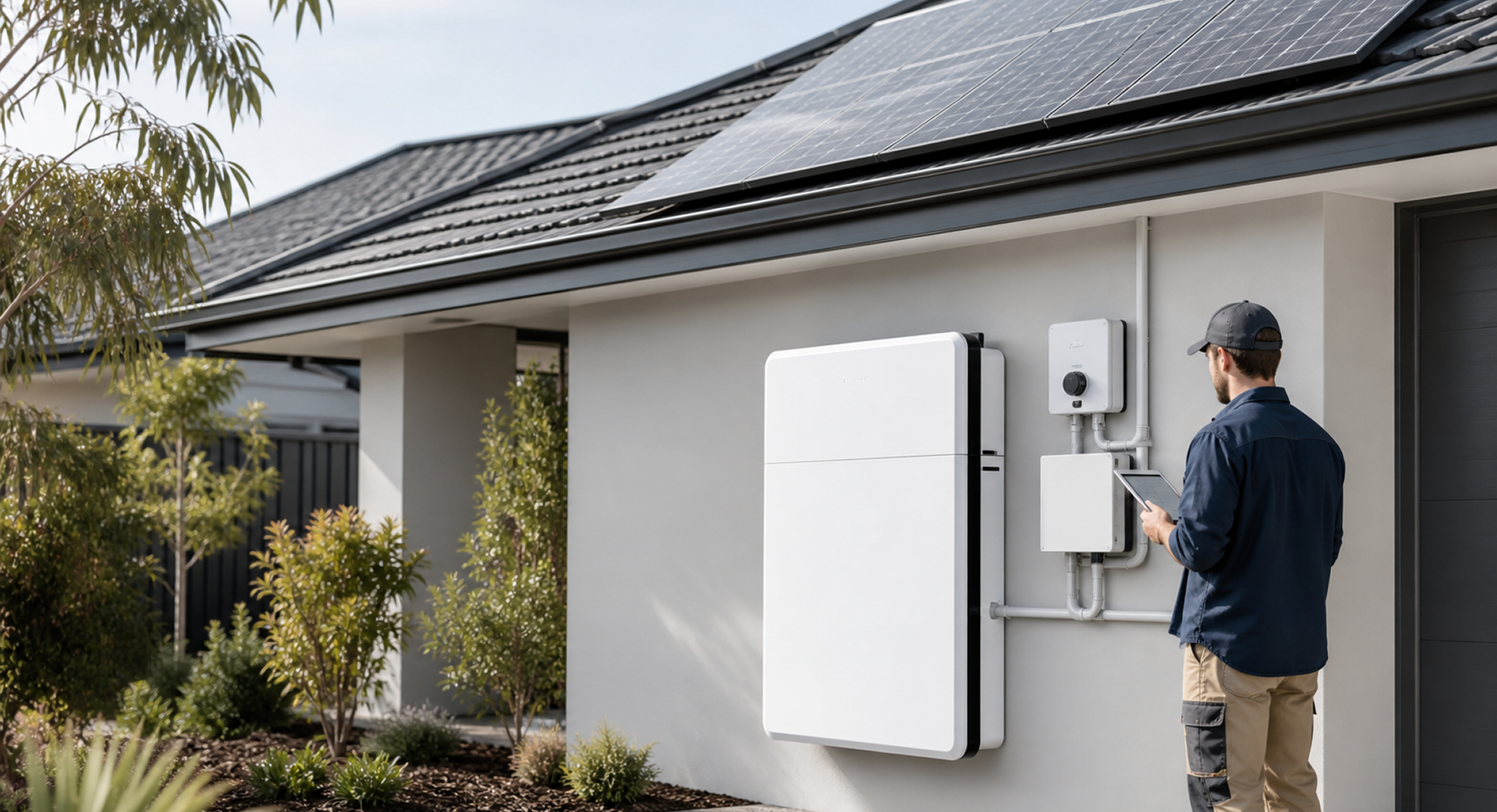
An on-grid system sends your excess power straight to the grid the moment it’s made. Pair it with a battery and that excess charges up at home instead — ready to run your house through the evening, when feed-in credits are worth the least and grid power costs the most.
What goes into your on-grid system
Every package we install pairs premium Tier-1 solar panels with a matched inverter
Get a tailored quote
Tell us your suburb and rough usage — we’ll size an on- grid system to your roof and send pricing within one business day.
FAQ's
What happens to my solar during a blackout?
On-grid systems shut down automatically when the grid goes down — this is a safety requirement. If backup power matters to you, a hybrid inverter with battery storage can keep essential circuits running.
Do I need a battery to go solar?
The ideal battery capacity depends on your daily electricity usage, the size of your solar system and your future energy plans. We’ll provide a personalised recommendation during your consultation.
What is a bi-directional meter?
Absolutely. Many larger homes benefit from battery storage because they consume more electricity during the evening when solar panels are no longer producing power.
How much can I save with on-grid solar?
Yes. Every consultation is free, with a customised proposal explaining the recommended battery options, expected benefits and transparent pricing.